It’s common for timber frame and truss plants across New Zealand to have advanced detailing software and automated assembly lines, but the timber cutting stage is often less refined - still reliant on operator skill and fixed saw settings.
Even after years of equipment innovation, the cutting room remains one of the least measured and least optimised links in the chain. This begs the question: Are you missing out on performance gains, cost savings, and product consistency because you’re not running cutting as a data-driven system?
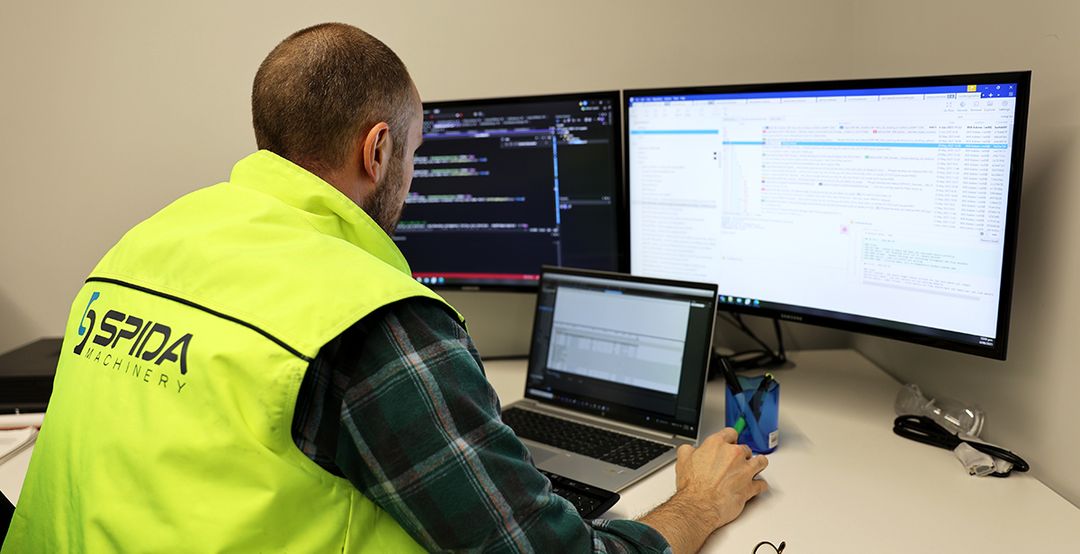

Leading Edge Equipment, Traditional Mindset
Many modern saws and cutting lines offer programmable controls and integrate with digital detailing systems, but in practice, true optimisation rarely goes beyond the initial setup. Feed rates are typically based on operator experience or the manufacturer’s handbook. Blade swaps are scheduled on gut feel or when cut quality declines. Most issues are only picked up once defects show up or jobs are delayed. In short, the equipment might be advanced, but the process of running it often isn’t - and that’s a blind spot for many fabricators.
Without meaningful data, simple questions remain unanswered. How much does each cut actually cost you? Is that blade truly past its best? Where’s the real bottleneck - cutting, handling, or rework? Where are we losing the most time? If you can’t measure it, you can’t improve it.
What Would a Measurable Timber Cutting Process Look Like?
Creating a measurable cutting system doesn’t require a leap to futuristic technology - it just starts with visibility. Imagine if your saws tracked cut time, throughput, and idle time automatically. Blade performance could be monitored by output quality and actual usage, not guesswork. You’d be able to see differences between operators, teams, or shifts, and feed this data into production planning and costing. Suddenly, cutting transforms from a stand-alone step into an integrated, continuously optimisable part of your operation - much like CNC machining or dispatch logistics.
Small Gains, Big Impact
Cutting is a high-frequency task, meaning small inefficiencies quickly stack up. The impact of targeted improvements might include:
- A modest lift in cutting speed, without sacrificing accuracy
- Lower timber waste through better process control
- Fewer stoppages due to blade failure
- Less rework thanks to more consistent cuts
Individually these may seem minor, but across thousands of cuts per week and a number of jobs, they become key drivers for margin and throughput.
Why Isn’t This Already the Norm?
So, what’s stopping frame and truss fabricators from making data-driven cutting, standard practice?
- Mixed Equipment: Most New Zealand plants run a mix of older and newer saws from different suppliers, making standardisation and data collection tricky.
- Limited Instrumentation: Unlike some other stages in the production process, cutting lines often lack built-in sensors or easy data capture.
- People Factors: Cutting has long been seen as a skill - relying on the sight, sound, and feel of experienced operators - insight that’s hard to log or analyse.
- ROI Questions: Without initial data, justifying investment in tracking tools or new processes is challenging.
Bringing Experience and Insight Together
The goal isn’t to replace operator expertise, but to enhance it. Skilled saw operators already make fine-tuned calls - adjusting for timber density, picking up early signs of blade wear, and adapting for variable stock. Capturing and converting this knowledge into data is where the real opportunity lies. Even simple steps like logging blade life, tracking downtime, or benchmarking shifts can uncover patterns and drive improvement.
Looking Forward: The Shift to Smarter Cutting Systems
Manufacturing in New Zealand is evolving, and timber cutting won’t stay isolated for long. Early signs of change are already here: equipment that reports live stats, detailing software that feeds instructions directly to saws, and more focus on predictive maintenance and process control. The real question isn’t whether cutting will become more data-driven, but rather, how soon will Kiwi fabricators make the switch?
A Change in Perspective
For many, the biggest shift is in mindset, not machinery. When you treat cutting as a data-driven system, it becomes a controllable, measurable process with real potential for gains. The businesses that move early won’t just cut timber more efficiently; they’ll make smarter, more profitable decisions right across the factory floor.
Keen to learn how a data-driven approach could improve your timber cutting? Reach out to us for a chat.